Table of Contents
- What Is an Ultrasound Scan?
- Common Uses of Ultrasound
- What Is a CT Scan?
- Common Uses of CT Scans
- Ultrasound vs CT Scan: Key Differences
- When Is an Ultrasound Better Than a CT Scan?
- When Is a CT Scan More Appropriate?
- How to Prepare for an Ultrasound Scan
- How to Prepare for a CT Scan
- Ultrasound vs CT Scan: Safety and Risks
- Ultrasound vs CT Scan Cost in Jaipur
- Conclusion
- Frequently Asked Questions
- Is ultrasound safer than a CT scan?
- Can a CT scan detect conditions that ultrasound cannot?
- Do I need to fast before an ultrasound or CT scan?
- Which scan is better for abdominal pain?
- Can pregnant women undergo a CT scan?
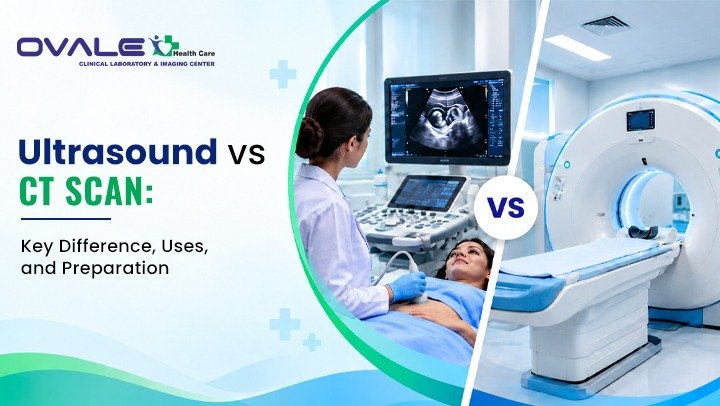
An ultrasound uses sound waves to build images of the body, while a CT scan uses X-rays to create detailed cross-sections. Doctors choose the tests based on your symptoms, the part of the body being checked and what they need to see. The right scan is the one that answers your doctor's question with the least risk to you.
Both tests help doctors find the cause of pain, check on a pregnancy, spot an infection or look for something more serious. They work in very different ways, and knowing how both these procedures work helps you in choosing the right treatment at the right time.
What Is an Ultrasound Scan?
An ultrasound scan uses high-frequency sound waves that you can't hear. A small handheld device, called a transducer, is moved over your skin with a bit of gel. The sound waves bounce off organs and tissues, and a computer turns those echoes into a live picture on a screen.
Because the image appears in real time, the doctor can watch movement. They can see a baby's heartbeat, blood flowing through a vessel or an organ shifting as you breathe.
Common types of ultrasound
-
Abdominal ultrasound: Liver, gallbladder, kidneys, pancreas and spleen
-
Pelvic ultrasound: Uterus, ovaries and bladder
-
Obstetric ultrasound: Checks a baby's growth and development
-
Doppler ultrasound: Looks at blood flow in arteries and veins
-
Small-parts ultrasound: Thyroid, breast and other soft tissues
What it can examine
Doctors use ultrasound to check organs, fluid collections, lumps, blood vessels and the growth of a baby during pregnancy.
Benefits and limitations
The big advantage is safety. There's no ionising radiation, it's usually painless, and it's quick. It's also widely available.
Sound waves don't travel well through air or bone. That means gas in the bowel, extra body fat or the lungs can make images harder to read. Results also depend on the skill of the person doing the scan.
Common Uses of Ultrasound
Here are the most common uses:
-
Pregnancy monitoring: Checking the baby's position, growth and heartbeat
-
Abdominal and pelvic examinations: Looking for the cause of pain, swelling or irregular periods
-
Gallbladder and kidney assessment: Spotting stones, cysts and blockages
-
Thyroid and soft-tissue examinations: Assessing lumps, swelling and nodules
Many people look for a CT scan in Jaipur when a doctor asks for a quick, radiation-free check. To learn more about available diagnostic options, see our ultrasound scan in Jaipur services.
What Is a CT Scan?
A Ct scan short for computed tomography takes many X-ray images from different angles as you lie on a table that slides through a large ring. A computer then processes these images to produce detailed cross-sectional views of the body.
Common types of CT scans
-
Head and brain CT
-
Chest CT
-
Abdomen and pelvis CT
-
Spine and bone CT
-
CT angiography, which looks at blood vessels
CT scans with and without contrast
Some CT scans are done without anything extra. Others use a contrast dye, given through a vein or taken by mouth, which makes certain tissues and blood vessels show up more clearly. Whether you need contrast depends on what the doctor is looking for.
Benefits and limitations
CT is fast and gives clear, detailed images. It's very good for bones, the chest and many emergencies. The trade-off is radiation exposure, and contrast dye can cause problems in some people. It also usually costs more than a basic ultrasound.
Common Uses of CT Scans
-
Certain injuries and internal bleeding: Often used in emergencies and trauma
-
Chest and lungs: Looking at infections, nodules and other changes
-
Abdominal conditions: Investigating pain, masses or complications
-
Bones and internal structures: Fractures, spinal problems and complex anatomy
For information about available diagnostic tests, visit Ovale Healthcare and explore the CT Scan Services at Ovale Healthcare listed on our website.
Ultrasound vs CT Scan: Key Differences
The two tests answer different questions, so comparing them side by side helps. Here is a quick view of how they differ in technology, safety and use.
|
Feature |
Ultrasound |
CT Scan |
|
Technology |
Sound waves |
X-rays |
|
Ionising radiation |
No |
Yes |
|
Images |
Real-time imaging possible |
Cross-sectional images |
|
Common uses |
Pregnancy and selected soft-tissue or abdominal examinations |
Trauma, lungs, bones and many internal conditions |
|
Contrast |
Not usually required |
Sometimes required |
|
Preparation |
Depends on examination |
Depends on examination and contrast |
The right scan depends on your condition and on your doctor's recommendation. The difference between ultrasound and CT scan ends up being a clinical decision.
When Is an Ultrasound Better Than a CT Scan?
Ultrasound is often the first choice when doctors want a safe, quick look at soft tissues, organs or a pregnancy without radiation. That doesn't make it the better test overall. It simply fits certain situations well.
-
Pregnancy-related imaging: Ultrasound is widely used to monitor a baby because it doesn't use ionising radiation.
-
Abdominal and pelvic examinations: It works well for the liver, gallbladder, kidneys, uterus and ovaries.
-
Real-time checks: Doctors can watch blood flow or guide a needle during a procedure.
-
Repeat scans: Since there's no radiation, it can be repeated when needed.
Ultrasound limitations
It may not be effective when gas, bone or a lot of body fat blocks the sound waves. If the images aren't clear enough to answer the question, your doctor may ask for a CT scan or another test.
When Is a CT Scan More Appropriate?
A CT scan is usually chosen when doctors need fast, detailed images, especially in emergencies or when other tests haven't given a clear answer.
-
Emergencies and traumatic injuries: CT can quickly show internal bleeding or organ damage.
-
Lungs and bones: It gives a clear view of the chest, fractures and the spine.
-
Cross-sectional imaging: Some conditions need slices through the body to be seen properly.
-
When ultrasound isn't enough: If an ultrasound doesn't fully explain the symptoms, CT can add detail.
It isn't universally better. Doctors weigh the extra detail against the radiation dose each time.
How to Prepare for an Ultrasound Scan
Preparation for ultrasound depends on the body part being checked, so it's worth following the instructions you're given. Some scans need no preparation at all, while others have specific rules.
-
Fasting: Some abdominal scans need you to avoid food for several hours so the gallbladder and bowel are easier to see.
-
Full bladder: Certain pelvic scans work best when your bladder is full, so you may be asked to drink water beforehand.
-
Clothing: Wear loose, comfortable clothes. You may need to expose the area being scanned.
-
Why it varies: Different organs need different conditions for clear images.
Because requirements change from scan to scan, ask the centre what applies to yours. Ultrasound preparation is usually simple, but getting it wrong can mean a repeat visit.
How to Prepare for a CT Scan
Preparing for a CT scan mostly comes down to following the centre's instructions and sharing your medical history
-
Food and fluids: Follow the centre's instructions. If contrast is planned, you may be asked to avoid food for a few hours.
-
Pregnancy: Tell the team if you are pregnant or think you might be.
-
Past reactions and conditions: Mention any earlier reaction to contrast dye, plus conditions such as kidney disease, diabetes or allergies.
-
Contrast and kidney function: When contrast is used, you may need a kidney function test first. Follow the instructions you're given.
-
What to wear: Metal items can interfere with images, so you may be asked to remove jewellery or change into a gown.
Good CT scan preparation helps the scan run smoothly and lowers the chance of problems with contrast dye.
Ultrasound vs CT Scan: Safety and Risks
The main safety difference is radiation. Ultrasound uses sound waves and no ionising radiation. A CT scan uses X-rays, which means you receive a radiation dose. That doesn't mean CT is unsafe.
-
Doctors order it when the expected diagnostic benefit justifies the exposure. In an emergency, or when a diagnosis can't be made another way, a CT can be lifesaving. Imaging centres also aim to use the lowest dose that still gives clear images.
-
Contrast agents add another layer. Some people have allergic-type reactions, and contrast can affect people with kidney problems. That's why the team asks about your history first.
Ultrasound is generally considered very safe, but it isn't perfect for everything. The safest test is the one that gives your doctor the answer they need.
Ultrasound vs CT Scan Cost in Jaipur
Prices vary by centre and by test, so there's no single figure to quote. What you pay depends on several things:
-
The body part scanned: A single-region scan and a multi-region scan are priced differently
-
The type and protocol: A CT scan with contrast usually costs more than one without
-
The technology used: Advanced machines and specialised protocols can change the price
-
Add-ons: Reporting, repeat views or related tests can affect the total
CT scans tend to cost more than ultrasounds, but exact amounts vary. Please confirm the current price directly with the diagnostic centre before you book. You can explore the diagnostic tests at Ovale Healthcare to learn more about the listed testing options.
Conclusion
Ultrasound uses sound waves and no radiation, and it's great for pregnancy and soft tissue checks. CT uses X-rays and gives detailed cross-sectional images, which makes it valuable for emergencies, lungs and bones. The right choice depends on your symptoms and your doctor's advice, not on which test sounds more advanced. If you have questions about a scan, speak to your doctor first. For questions about available diagnostic services or appointments, contact Ovale Healthcare.
Frequently Asked Questions
Is ultrasound safer than a CT scan?
Ultrasound doesn't use ionising radiation, while CT does. That makes ultrasound the lower-risk option in terms of radiation. Still, the best choice depends on the clinical need, and your doctor will pick the test that fits your situation.
Can a CT scan detect conditions that ultrasound cannot?
Yes, in some cases. CT can give more useful detail for the lungs, bones and certain emergencies. But it isn't universally better. For many soft-tissue and pregnancy questions, ultrasound is the more suitable test.
Do I need to fast before an ultrasound or CT scan?
It depends. Some abdominal ultrasounds and CT scans with contrast need fasting, while many other scans don't. Always follow the instructions from your doctor or the diagnostic centre.
Which scan is better for abdominal pain?
It depends on your symptoms, the suspected cause and your doctor's assessment. Ultrasound is often tried first for certain causes. CT may be used when more detail is needed, or the situation is urgent.
Can pregnant women undergo a CT scan?
Ultrasound is often preferred in pregnancy where appropriate. If a CT is necessary, the decision should be made by the treating clinician after weighing the benefits and risks. Always tell the team if you are or might be pregnant.
Need a test or scan? Book it today.
Accurate reports, trained technicians and quick turnaround in Jaipur.